Friday, March 7, 2008

i need a babysitter!

i have definitely used up all my favours with family and friends now, while i attend births. the last 3 have all been 24 hour plus births which means that my husband or mother or sister has to take time off to watch the kids.

clearly this is not an ideal situation.

but i'm SO paranoid and i simply can't imagine leaving my kids with a stranger. and to complicate matters, i need to leave the kids somewhere close by. i can't be driving in one direction to leave the kids and then drive downtown to the hospital.

so i've posted an ad in our laundry room bulletin board and i hopefully will find someone that i will feel comfortable with.

wish me luck!

Thursday, March 6, 2008

abandoning a birth

well it happened.

i had to literally RUN out of a birth. in retrospect my mother had been sick two days earlier with a stomach bug but on the day i was called to meet my client at the hospital that was the furthest thing from my mind.

my client had PROM (premature rupture of membranes) which means that her water broke before contractions started. she was admitted to hospital for a cold induction, meaning that her cervix was not showing any signs of being ready. After nearly 24 hours on pitocin, my client was still laughing through her contractions. the pit was as high as it could go for more than a few hours and she was still at barely 2 cm.

going backwards a little, i arrived at 6:30am. at around lunch i went to get some food and i didnt feel entirely right. for comfort food i sought out the dreaded mcdonalds (my comfort food even though i know its going to kill me).

back to 24 hours on pitocin....

the OB tells my client that its looking like caesarean. i had given my client a heads up about this prospect so she wouldnt be shocked but still it was upsetting to her. my client started to mention that i should leave because she didnt want me hanging around just for a c-section. i had every intention of staying to see the baby born (thats the best part dammit!) shortly after this discussion however, i started to feel unwell.

at first i didnt even understand what i was feeling. i thought maybe i needed to eat more or drink more and i called my husband to cry into the phone because i just felt so sick. i didnt know what to do. then i realized that i needed to throw up and thankfully ive spent enough hours in this particular hospital to know where all the nice, private bathrooms are.

i threw up my life and went back to my clients and let them know that i was under the weather. i thought i was fine and while they insisted that i go home, i really thought that i could stay with them. and then i realized that i was going to be sick again and i also realized that something was wrong with me.

i apologized profusely, wished them luck (i think) and RAN out the door.

again, i was violently ill. i ran to the subway, caught the train and made it home just in time to throw up again. and then again and again and again.

seriously, every hour. i have never in my life been that sick.

the good news is that my clients baby was delivered via c-section a few hours after i left and both mom and baby are doing well. the bad news is that while i have recovered, my son has now caught the bug. :(

Wednesday, February 27, 2008

what's in a diaper wipe anyways?

i used diaper wipes with india. then when kalden came along my awareness about chemicals and toxins was heightened and i took a look at what i was using to clean my kids butt. needless to say, after reading this i switched to a plain old cloth with warm water. kalden's bum has never looked better. :)


Cleansing ingredients

Water is the main ingredient and serves as a carrier and
diluent for the other ingredients. Baby wipes also contain mild detergents mixed with moisturizing agents, fragrance, and preservatives. The detergents most commonly used are known as amphoteric surfactants, similar to those found in baby shampoos. Sodium diamphoacetate and coco phosphatidyl PG-dimonium chloride are primary
surfactants used in wipes. These chemicals don't strip the skin of natural oils and also decrease skin
irritation potential. Mildness is a prime consideration given that the wipe solution may be in contact with delicate skin around the anus and genitals.
Humectants such as
propylene glycol and glycerine are added to prevent premature drying of the solution and contribute to skin moisturization. In addition, some formulas incorporate oils such as mineral oil, lanolin, or silicones that help to soften skin. Thickeners, such as cellulose derivatives like hydroxymethyl cellulose, control the viscosity of the finished product and keep it the right consistency.
Other ingredients include preservatives, such as
methyl and propyl paraben, to ensure the solution does not support microbial growth. Fragrance is usually added to increase consumer appeal and to help over-come body odors, but fragrance-free products are also offered. Featured ingredients may also be added to increase consumer appeal. These include natural ingredients that are known to be kind to the skin such as aloe vera or oatmeal extract.


do anti-depressants work as well as we think?


this article touches on something that i feel pretty strongly about. researchers found that most people do as well on sugar pills as they do on actual depression med's. therefore the placebo effect is largely responsible for mood improvement among anti-depressant users.

it is downright frightening how many people have taken, or currently take mood altering medications (myself included!). are we, as a society, not concerned about this? do we really think the "happy pills" are the answer?

on a discussion board that i'm part of, this topic became quite heated as people became defensive and somewhat aggressive. scientists (and eastern philosophers) know that the mind/body connection is much more powerful than we give it credit. we CAN control our moods without drugs, we just don't know how.

of course, it also has to be pointed out that there is little money to be made is just living healthier, doing yoga and eating your veggies. but there is a hell of a lot of money to be made selling little pink pills to everyone who feels down.
and why do we all feel so down anyways? is it because we're all self absorbed, caught up in our consumer culture, sitting in our SUV's going to the drive thru window at mcdonald's and then home to watch american idol and big brother 79? we are isolated in our society. we don't support one another. hell we don't even give up our seat on the bus for a pregnant lady. we don't talk. we IM, PM, text, email and maybe call. but do we take the time to sit with our friends and talk? more importantly do we take the time to listen?

Tuesday, February 26, 2008

i've been gone gone gone, been gone so long

i lost my mind.

it's true.

it's funny now but it wasn't funny about 3 weeks ago.

several months ago kalden began to wake up at night every single hour. before that there had been stretches of a few hours, maybe but then one day it became EVERY SINGLE HOUR. and on a really bad night he woke up every 45 minutes.

people didn't believe me. people told me he must be sick. people thought it was funny. (those people are dead now). i honestly started to become sick. i think my body thought that i was dying. i gained weight, cried all the time and yelled at my husband every day. there is a real reason that sleep deprivation is used as torture.

and kalden was miserable. he was cranky every second of the day and rightfully so - he was TIRED!

it got to the point where i took kalden to the doctor and just by my appearance, the doctor took me seriously. he said "this is NOT normal." i could have kissed him. he referred me to a pediatrician that he said could help me. but he said he could see no physical reason causing the lack of sleep. he could aslo see that even though kalden had just woken up from his nap, that he was tired.

so that night out of sheer frustration, i nursed kalden, patted his bum and then put him in his pack and play and i left the room. let me say this. i do not believe in "cry it out" methods. i think that babies cry for a reason and as a parent it's our job to respond.

however, after 11 months of no sleep and on the verge of a complete nervous breakdown i honestly had no choice. in his whole life, kalden has never slept on his own, never played by himself, never self soothed. and after 11 months it was time.

so he cried. it was more like protesting than crying and it last about 20 minutes. then 45 minutes later he woke up and cried again for a few minutes. then he SLEPT. for HOURS. he woke up at 2 and made some noise and then slept until morning.

since then, he has gone to bed at 8:00pm every night without a peep and he has slept until morning. it's like i've been reborn. i love sleep.

i think we timed it very well because during all this kalden was learning to walk and i've heard and read from a few sources that babies start sleeping better once they learn to walk. maybe that helped. all i know is that my son is like a new child. he's happy and playful and EVERYONE has noticed the difference.

and i have started excercising and wearing makeup and buying new clothes... i have a lot on my plate but i now i think i can actually handle it.

so i'm back.

Sunday, January 20, 2008

urban sprawl... the apocalypse of community

Christopher Dewdney on the sprawl apocalypse

LUCAS OLENIUK/TORONTO STAR

The Vellore Woods housing development west of Hwy. 400 at Rutherford Road in Vaughan.

Jan 19, 2008 04:30 AM

Christopher Dewdney

Trouble is, everybody wants their slice of the dream; the upscale house, the luxury car. And everything's getting bigger. Apparently hybrids were a blip. SUVs are once again selling in high gear and personal trucks are Detroit's new glamour rides. Size is everything. The "middle class" homes rising by the thousands in Toronto's burgeoning suburbs are big, too, even by Forest Hill standards. They boast cathedral ceilings, cavernous kitchens, hardwood floors throughout, and often sport massive winding staircases that lead to half a dozen bedrooms, (most with en suite bathrooms) – and all at half the price of a comparable space downtown. They're not much to look at architecturally speaking, but they are selling like hotcakes. Downtown may be downsizing into condos, but 905 is super-sizing into Dallas style manors.

And more and more families are moving there. On a grey, overcast afternoon a few weeks ago I drove up Bathurst Street to Aurora and was amazed at how, in little over a year, the suburban frontier of "monster" homes has been pushed right to the brink of the Oak Ridges moraine. I saw angular, particleboard silhouettes on distant hills that once sported thick woodlots, I saw armies of earthmovers and row after row of empty homes sprouting out of the contoured mud. There were no stores, no schools, no malls, no theatres, no restaurants, just mile after dreary mile of new homes. And I can think of nothing that can stop this advance.

In the film Airsick there is a scene where the camera pulls out from what seems to be a verdant forest. As the view expands to take in more and more landscape you realize that the "forest" is actually an island in the midst of a suburban development. A very small island. I imagined then how I would make my own film about urban sprawl, one that made the same point but from a very different vantage. Like Airsick and Koyaanisqatsi before it, my movie would use time-lapse film to speed things up, but I wouldn't speed up traffic or clouds; my time-lapse would accelerate urban sprawl and would require years to film. Technically speaking it would be simple, and I think it would be very dramatic.

I picture my film camera mounted on a tripod set in concrete (in order to stabilize it) on top of a hill overlooking a forested region north of Toronto. Every month I would visit the camera, (which is pointed south), and take a few frames. For years the seasons would come and go, but the forested hills and cornfields would remain relatively unchanged. On clear days you might see the CN Tower and a few office buildings, but they would look more like distant mirages than anything substantial.

Then one year, at the edge of the southern horizon, the first silhouettes of houses would appear. Each year they would edge closer so that, over the 15-year period of the film, a time-lapse version of the encroachment of suburbia would be captured. What would the film look when it was finished? I think I can guess.

Most of us have seen footage from the pre-dawn nuclear tests that the U.S. conducted in Nevada during the late 1950s and early 1960s – the countdown, the anticipation and then, suddenly, the empty desert landscape is flooded with a blinding flash as the bomb detonates some 10 or 20 miles distant from the position of the documentary film camera capturing the blast. As the light gradually dims you begin to see the shape of the mushroom cloud, its cap a glowing fireball rising into the sky. The light from the fireball illuminates the desert around the explosion, as well as the distant mountains behind it.

It's visually spectacular in a grotesque sort of way, and harmlessly distant, until you notice something racing along the ground – a low disc spreading out from the base of the mushroom cloud. The shockwave. Racing outwards from the explosion at the speed of sound, the shockwave creates the most damage from the blast. Where its leading edge brushes the desert it stirs up a two-foot-thick dust storm of sand and nothing stops it. Within seconds it races up to the position of the camera which recoils from the impact of the shockwave. The film wobbles a bit. Even at this distance the explosion is dangerous.

The metaphor is straightforward, I guess. Toronto's downtown office towers are the mushroom cloud rising toward the sky and the suburbs are the shockwave, racing over the desert. Only instead of desert this shockwave is levelling forests and streams and farmland. And there is another difference. Suburban sprawl is much more dangerous, and permanent, than an atomic concussion. There is no "day after" a subdivision has been installed. My time-lapse film would end when the camera and its concrete base was removed by construction workers. No transient wobble from a dissipated shockwave. Blackness would end this film.

If the shockwave metaphor captured the outward movement of suburban development then I'd have to shift analogies to describe the permanence of a suburb. Perhaps a lava flow would be more accurate, because after lava has spread out from the volcano and cooled, everything beneath it has been destroyed and buried. The dream costs more than we think.

http://www.thestar.com/article/294701

Tuesday, January 1, 2008

a real honour...

every time a doula attends a birth, we feel privileged to have been invited into such a personal and special event in people's lives.  at a recent birth i was blessed with the honour of cutting the baby's umbilical cord and each time i remember that moment i feel a wave of emotion come over me.

at the time it was sort of a blur; it had been a long labour and i think we were all a little loopy by the end, but looking back - i swell with pride and joy.   being allowed to witness tiny little babies enter the world is such a wonderful gift.  but the fact that the mother, after such a momentous event and such a huge journey thought of asking me to cut the cord truly speaks volumes to me.

as a doula, i am constantly wondering if i could have done something differently, improved an outcome, changed a path for a client... and then every once in a while there is a gesture or a moment or an event that reminds me that i am just one person, doing the best i can.

and so every once in a while i think about that cord cutting moment and then i know that i am in the right line of work.  :)

Sunday, December 30, 2007

sleep deprivation as torture.

i suppose the good thing about kalden's sleep habits (or lack thereof) is that i will truly be able to empathize with my clients after their babies are born.  not that i couldn't before (india had her own issues as a babe) but kalden is certainly taking the cake for most difficult/bad/unpredictable/needy sleeper.

since birth kalden has not been a baby that i could just put down.  not in his pack and play, not in his bouncer, not in his bassinet, nowhere.  he was and is only content in my arms.  he has never fallen asleep on his own.  if he falls asleep in my arms and even SENSES that i'm going to put him down, he's awake and crying instantly.  the only way i can do it, is to lie down with him and gently release him.  let me re-iterate, it's been like this since day one.

i have a 3 year old who also coslept with me for a few months but she was a completely different character.

so now at nearly 10 months old, kalden is waking up every 45 minutes to 2 hours.  that means i havent slept in MONTHS.  i'm at the point where i'm miserable all the time.

last night it took me 5 hours to get kalden to sleep only to have him wake up an hour later. i wanted to jump off my balcony.

i've read all the "experts" and while i like dr. sears and elizabeth pantley, kalden's sleeping/self soothing habits seem so bad that i don't even know where to start.

what do you do if bedtime is 7:30 but you baby won't sleep until midnight?

right now max is responsible for getting him to sleep.  then i will go on duty overnight using Pantley's pull off method.  (only nursing for a few seconds and then unlatching baby - it takes 15 tries sometimes but they eventually fall asleep).  it's utterly exhausting and if it doesn't work then i'm going to cry. more.

check back here in a week.

Saturday, December 29, 2007

wise words from a wise woman - the nestle boycott

on a local parenting forum i'm on, many of us are "lactivists".  we're the tree lovin, hippy mamas that love to boycott and get active about what we believe in.

in a discussion about nestle and why we should all be boycotting them, my wise friend deb had this to say:

(orange text are my edits)

it isn't about being a bad mother or a good mother. It isn't that Breastfeeding is BEST.. it is that Formula Feeding is inferior...

(world health organization recommends:)
1 momma's milk from source
2 momma's milk expressed and bottled
3 human milk from another source
4 formula


and if you are in that 3% of women who cannot breastfeed their child then you gotta do what you gotta do and there is no good or bad attached to it. Someone isn't bad because they can't hear or see.. they find other ways.. but you know more than 3% of the population use formula.. because they believe it is equal to breastmilk or 'good enough'.

There are entire populations (the Philippines for one) who are tricked by advertising to believe that formula is BETTER.

HERE in canada women are often told by their DOCTORS that their milk isn't good enough, that their baby needs to put on more weight and their milk isn't rich enough.. better switch to formula. So the woman, thinking she is doing what is best for her baby, listens to her doctor and the advertising she sees on reputable sites, in her own doctors office and thinks.. maybe even subconsciously.. well if they endorse it, it can't be that bad can it?

the problem is that the formula companies are RUTHLESS.. they want to make a buck.. they don't give a good god damn about children's health or women's rights to knowledge. They want the MONEY.

in the Philippines the formula companies give doctors, midwives and nurses expensive cruises, holiday packages and take them out for expensive evenings all to get THEIR formula in their offices and samples in their 'take home packages" given to new moms.. the rate of formula feeding is really high over there.. most women think they can't produce good milk , or that it is genetic - "well NO ONE in our family could ever produce milk. so they don't even try."

AND the advertising over there is so misleading .. they'd have you believe if you give your child their formula .. your child will have the best start and become a concert violinist... and when your child is 8 and playing her violin on stage to hundreds of adoring fans..she will look at you and thank you for feeding her X brand formula.. IT IS SICKENING...

the TRUTH is that formula has become a social status thing too... people who can afford it are obviously wealthy and doing the BEST for their children. People who can't, thin it out, (causing malnourishment and brain damage) AND often they are using questionable water supplies.. so many children die of dysentery over there.
and it is no better in africa where they give the moms a 3 months supply of formula for free (like crack cocaine.. get them hooked then they'll have to pay) the mom's milk supply dries up and they have to buy it to feed their kids.. but the same problems arise... contaminated water supplies and thinning the formula to make it last longer.. and you have sick and dying babies...

all they needed was their mother's milk and thousands would be saved.. so NO it isn't OVER THE TOP TO SAY THAT FORMULA COMPANIES KILL BABIES....

ANYWAY.... how does that correspond to western cultures.. how does it affect US...

well for one the WHO set up these policies about where, when and how formula companies could market their formula. A bunch of people boycotted Nestle and they were FEELING it.. so when WHO came out with these guidelines.. Nestle and a bunch of the other formula companies signed it.... THEY SIGNED IT.. THEY AGREED .... and people stopped boycotting NESTLE.. well over the years.. they are back to their old tricks.. ignoring the WHO guidelines and breaking their agreement. 

WHY is advertising formula a bad thing? I guess because it normalizes it. Like the "watch your language" article dani posted it makes it normal.. Breastfeeding is above and beyond.. (where the opposite is true breastfeeding is the norm and formula is inferior) if you can't do what is normal.. well of course you will do what you can.. Formula is NOT the same as breastfeeding but the adverts would have you believe it is better... American Breastfeeding rates are low. Canada isn't that great either.. we have been led to believe that formula is fine. My Sister in Law who is a NURSE planned to formula feed.. even when she found out she was going to have a preemie.. her logic "it was good enough for us it'll be good enough for him" oh and "I don't want him sucking at me" the advertising has worked on her. Feeding a baby from a bottle is acceptable.

Just this summer women across canada came together to stop an 'information seminar' on feeding your baby, the best way to avoid allergies.. it was dinner at a fancy downtown Vancouver Hotel for the staff of the Hospital in Burnaby.... sponsored by.. you guessed it.. NESTLE.. EVERYTHING we know about allergies and the immune system says Breastmilk is the best way.. but nope.. NESTLE is going to wine and dine a bunch of hospital workers in Burnaby and pitch to them that their formula can reduce the risk of allergies? absolute BOLLOCKS. (this event was cancelled due to the uproar)

The problem with advertising formula is that it is misleading.. like all advertising right? I mean does anyone REALLY believe that if you drink coors light beer you'll have a great life full of beautiful people or if you drink Captain Morgan's Spiced Rum you'll be cool? well NO of course not.. but with formula it is different.. it is about BABIES.. and doctors say it is ok.. so it MUST be true... but it isn't.. it is misleading and misguides people. The worst part is that your baby is only a baby for such a short time. not much time to do the research. you go to what you know.. if advertising for formula is everywhere and you have a sample in your home (I had 3 samples in my home.. never used them.. but they were here) when things are rough.. you have it RIGHT there... it is too easy.... and they (the formula companies) want it that way.

THERE is no money in breastfeeding.. who is going to pay for that advertising? What I think so many people forget is that the formula companies are out to make money... and they don't give a damn about the truth or your health or the health of the world's babies....

here is a link to the WHO code of marketing breastmilk substitutes.

here is more info on the nestle boycott:

babymilkaction

infact canada

breastfeeding.com

Friday, December 28, 2007

worst parenting advice - by gary ezzo

this fraudster is supposedly a parenting "expert" but with absolutely no credentials he has HORRIFYING ADVICE that i honestly consider to be abuse.  no parent should be advised to ignore their newborn babies cries.

in this day and age, where "attachment parenting" and "gentle parenting" are not just the growing trend, but the evidence based approach most reasonable health professionals recommend, imagine my horror when a mainstream website sent me their newsletter with the title "your baby can sleep through the night (top experts tell how)" and when i followed their link i found advice from this nutcase.

here's a snippet of his garbage, ahem, "wisdom":

Ezzo advocates putting newborns on a strict, every three- to four-hour feeding schedule, which he and Babywise proponents refer to as "parent-directed feeding" (PDF). From that, says Ezzo, will come babies that rarely cry, sleep through the night at eight weeks, and grow to be responsible, respectful members of the community.

what kind of a person expects an 8 week old to sleep through the night and what kind of idiot tells parents NOT to feed their baby when the baby is hungry?

if you're curious to know how Ezzo's advice has worked for some people you can go here: http://www.ezzo.info/voices.htm.  many babies have ended up hospitalized because of mr. ezzo's strict schedule.  apparently he thinks you can train a baby like you train a dog.

i sent the website promoting Ezzo's advice - www.babyzone.com - a VERY nasty email and so did some of my other mama friends.  to call him an "expert" is misleading and to repeat his advice is unforgivable. 

for REAL advice on how to deal with newborns there are a million places to go. 

www.mothering.com

www.askdrsears.com

www.pantley.com

www.kellymom.com

Thursday, December 27, 2007

watch your language!

this article moved me in a way i can hardly describe.  the author revolutionized how i think (and talk) about breastfeeding.  it's a hard pill to swallow but the truth often is, isn't it?.

Watch Your Language!
By Diane Wiessinger, MS, IBCLC
(Reprinted from the Journal of Human Lactation, Vol. 12, No. 1, 1996)

"The truth is, breastfeeding is nothing more than normal. Artificial feeding, which is neither the same nor superior, is therefore deficient, incomplete, and inferior. These are difficult words, but they have an appropriate place in our vocabulary."

The lactation consultant says, "You have the best chance to provide your baby with the best possible start in life, through the special bond of breastfeeding. The wonderful advantages to you and your baby will last a lifetime." And then the mother bottlefeeds. Why?

In part because that sales pitch could just as easily have come from a commercial baby milk pamphlet. When our phrasing and that of the baby milk industry are interchangeable, one of us is going about it wrong...and it probably isn't the multinationals. Here is some of the language that I think subverts our good intentions every time we use it.

Best possible, ideal, optimal, perfect. Are you the best possible parent? Is your home life ideal? Do you provide optimal meals? Of course not. Those are admirable goals, not minimum standards. Let's rephrase. Is your parenting inadequate? Is your home life subnormal? Do you provide deficient meals? Now it hurts. You may not expect to be far above normal, but you certainly don't want to be below normal.

When we (and the artificial milk manufacturers) say that breastfeeding is the best possible way to feed babies because it provides their ideal food, perfectly balanced for optimal infant nutrition, the logical response is, "So what?" Our own experience tells us that optimal is not necessary. Normal is fine, and implied in this language is the absolute normalcy--and thus safety and adequacy--of artificial feeding.

The truth is, breastfeeding is nothing more than normal. Artificial feeding, which is neither the same nor superior, is therefore deficient, incomplete, and inferior. Those are difficult words, but they have an appropriate place in our vocabulary.

Advantages. When we talk about the advantages of breastfeeding--the "lower rates" of cancer, the "reduced risk" of allergies, the "enhanced" bonding, the "stronger" immune system--we reinforce bottlefeeding yet again as the accepted, acceptable norm.

Health comparisons use a biological, not cultural, norm, whether the deviation is harmful or helpful. Smokers have higher rates of illness; increasing prenatal folic acid may reduce fetal defects. Because breastfeeding is the biological norm, breastfed babies are not "healthier;" artificially-fed babies are ill more often and more seriously. Breastfed babies do not "smell better;" artificial feeding results in an abnormal and unpleasant odor that reflects problems in an infant's gut. We cannot expect to create a breastfeeding culture if we do not insist on a breastfeeding model of health in both our language and our literature.

We must not let inverted phrasing by the media and by our peers go unchallenged. When we fail to describe the hazards of artificial feeding, we deprive mothers of crucial decision-making information. The mother having difficulty with breastfeeding may not seek help just to achieve a "special bonus;" but she may clamor for help if she knows how much she and her baby stand to lose. She is less likely to use artificial milk just "to get him used to a bottle" if she knows that the contents of that bottle cause harm.

Nowhere is the comfortable illusion of bottlefed normalcy more carefully preserved than in discussions of cognitive development. When I ask groups of health professionals if they are familiar with the study on parental smoking and IQ (1), someone always tells me that the children of smoking mothers had "lower IQs." When I ask about the study of premature infants fed either human milk or artificial milk (2), someone always knows that the breastmilk-fed babies were "smarter." I have never seen either study presented any other way by the media--or even by the authors themselves. Even health professionals are shocked when I rephrase the results using breastfeeding as the norm: the artificially-fed children, like children of smokers, had lower IQs.
Inverting reality becomes even more misleading when we use percentages, because the numbers change depending on what we choose as our standard. If B is 3/4 of A, then a is 4/3 of B. Choose A as the standard, and B is 25% less. Choose B as the standard, and A is 33 1/3% more. Thus, if an item costing 100 units is put on sale for "25% less,"the price becomes 75. When the sale is over, and the item is marked back up, it must be marked up 33 1/3% to get the price up to 100. Those same figures appear in a recent study (3), which found a "25% decrease" in breast cancer rates among women who were breastfed as infants. Restated using breastfed health as the norm, there was a 33-1/3% increase in breast cancer rates among women who were artificially fed. Imagine the different impact those two statements would have on the public.

Special. "Breastfeeding is a special relationship." "Set up a special nursing corner." In or family, special meals take extra time. Special occasions mean extra work. Special is nice, but it is complicated, it is not an ongoing part of life, and it is not something we want to do very often. For most women, nursing must fit easily into a busy life--and, of course, it does. "Special" is weaning advice, not breastfeeding advice.

Breastfeeding is best; artificial milk is second best. Not according to the World Health Organization. Its hierarchy is: 1) breastfeeding; 2) the mother's own milk expressed and given to her child some other way; 3) the milk of another human mother; and 4) artificial milk feeds (4). We need to keep this clear in our own minds and make it clear to others. "The next best thing to mother herself" comes from a breast, not from a can. The free sample perched so enticingly on the shelf at the doctor's office is only the fourth best solution to breastfeeding problems.

There is a need for standard formula in some situations. Only because we do not have human milk banks. The person who needs additional blood does not turn to a fourth-rate substitute; there are blood banks that provide human blood for human beings. He does not need to have a special illness to qualify. All he needs is a personal shortage of blood. Yet only those infants who cannot tolerate fourth best are privileged enough to receive third best. I wonder what will happen when a relatively inexpensive commercial blood is designed that carries a substantially higher health risk than donor blood. Who will be considered unimportant enough to receive it? When we find ourselves using artificial milk with a client, let's remind her and her health care providers that banked human milk ought to be available. Milk banks are more likely to become part of our culture if they first become part of our language.

We do not want to make bottlefeeding mothers feel guilty. Guilt is a concept that many women embrace automatically, even when they know that circumstances are truly beyond their control. (My mother has been known to apologize for the weather.)

Women's (nearly) automatic assumption of guilt is evident in their responses to this scenario: Suppose you have taken a class in aerodynamics. You have also seen pilots fly planes. Now, imagine that you are the passenger in a two-seat plane. The pilot has a heart attack, and it is up to you to fly the plane. You crash. Do you feel guilty?

The males I asked responded, "No. Knowing about aerodynamics doesn't mean you can fly an airplane." "No, because I would have done my best." "No. I might feel really bad about the plane and pilot, but I wouldn't feel guilty." "No. Planes are complicated to fly, even if you've seen someone do it."

What did the females say? "I wouldn't feel guilty about the plane, but I might about the pilot because there was a slight chance that I could have managed to land that plane." "Yes, because I'm very hard on myself about my mistakes. Feeling bad and feeling guilty are all mixed up for me." "Yes, I mean, of course. I know I shouldn't, but I probably would." "Did I kill someone else? If I didn't kill anyone else, then I don't feel guilty." Note the phrases "my mistakes," "I know I shouldn't," and "Did I kill anyone?" for an event over which these women would have had no control!

The mother who opts not to breastfeed, or who does not do so as long as she planned, is doing the best she can with the resources at hand. She may have had the standard "breast is best" spiel (the course in aerodynamics) and she may have seen a few mothers nursing at the mall (like watching the pilot on the plane's overhead screen). That is clearly not enough information or training. But she may still feel guilty. She's female.

Most of us have seen well-informed mothers struggle unsuccessfully to establish breastfeeding, and turn to bottlefeeding with a sense of acceptance because they know they did their best. And we have seen less well-informed mothers later rage against a system that did not give them the resources they later discovered they needed. Help a mother who says she feels guilty to analyze her feelings, and you may uncover a very different emotion. Someone long ago handed these mothers the word "guilt." It is the wrong word.

Try this on: You have been crippled in a serious accident. Your physicians and physical therapists explain that learning to walk again would involve months of extremely painful and difficult work with no guarantee of success. They help you adjust to life in a wheelchair, and support you through the difficulties that result. Twenty years later, when your legs have withered beyond all hope, you meet someone whose accident matched your own. "It was difficult," she says. "It was three months of sheer hell. But I've been walking every since." Would you feel guilty?

Women to whom I posed this scenario told me they would feel angry, betrayed, cheated. They would wish they could do it over with better information. They would feel regret for opportunities lost. Some of the women said they would feel guilty for not having sought out more opinions, for not having persevered in the absence of information and support. But gender-engendered guilt aside, we do not feel guilty about having been deprived of a pleasure. The mother who does not breastfeed impairs her own health, increases the difficulty and expense of infant and child rearing, an dismisses one of life's most delightful relationships. She has lost something basic to her own well-being. What image of the satisfactions of breastfeeding do we convey when we use the word "guilt"?

Let's rephrase, using the words women themselves gave me: "We don't want to make bottlefeeding mothers feel angry. We don't want to make them feel betrayed. We don't want to make them feel cheated." Peel back the layered implications of "we don't want to make them feel guilty," and you will find a system trying to cover its own tracks. It is not trying to protect her. It is trying to protect itself. Let's level with mothers, support them when breastfeeding doesn't work, and help them move beyond this inaccurate and ineffective word.

Pros and cons, advantages and disadvantages. Breastfeeding is a straight-forward health issue, not one of two equivalent choices. "One disadvantage of not smoking is that you are more likely to find secondhand smoke annoying. One advantage of smoking is that it can contribute to weight loss." The real issue is differential morbidity and mortality. The rest--whether we are talking about tobacco or commercial baby milks--is just smoke.

One maternity center uses a "balanced" approach on an "infant feeding preference card" (5) that lists odorless stools and a return of the uterus to its normal size on the five lines of breastfeeding advantages. (Does this mean the bottlefeeding mother's uterus never returns to normal?) Leaking breasts and an inability to see how much the baby is getting are included on the four lines of disadvantages. A formula-feeding advantage is that some mothers find it "less inhibiting and embarrassing." The maternity facility reported good acceptance by the pediatric medical staff and no marked change in the rates of breastfeeding or bottlefeeding. That is not surprising. The information is not substantially different from the "balanced" lists that the artificial milk salesmen have peddled for years. It is probably an even better sales pitch because it now carries very clear hospital endorsement. "Fully informed," the mother now feels confident making a life-long health decision based on relative diaper smells and the amount of skin that shows during feedings.

Why do the commercial baby milk companies offer pro and con lists that acknowledge some of their product's shortcomings? Because any "balanced" approach that is presented in a heavily biased culture automatically supports the bias. If A and B are nearly equivalent, and if more than 90% of mothers ultimately choose B, as mothers in the United States do (according to an unpublished 1992 Mothers' Survey by Ross Laboratories that indicated fewer than 10% of U.S. mothers nursing at a year), it makes sense to follow the majority. If there were an important difference, surely the health profession would make a point of not staying out of the decision-making process.
It is the parents' choice to make. True. But deliberately stepping out of the process implies that the "balanced" list was accurate. In a recent issue of Parenting magazine, a pediatrician comments, "When I first visit a new mother in the hospital, I ask, 'Are you breastfeeding or bottlefeeding?' If she says she is going to bottlefeed, I nod and move on to my next questions. Supporting new parents means supporting them in whatever choices they make; you don't march in postpartum and tell someone she's making a terrible mistake, depriving herself and her child." (6)

Yet if a woman announced to her doctor, midway through a routine physical examination, that she took up smoking a few days earlier, the physician would make sure she understood the hazards, reasoning that now was the easiest time for her to change her mind. It is hypocritical and irresponsible to take a clear position on smoking and "let parents decide" about breastfeeding without first making sure of their information base. Life choices are always the individual's to make. That does not mean his or her information sources should be mute, nor that the parents who opt for bottlefeeding should be denied information that might prompt a different decision with a subsequent child.

Breastfeeding. Most other mammals never even see their own milk, and I doubt that any other mammalian mother deliberately "feeds" her young by basing her nursing intervals on what she infers the baby's hunger level to be. Nursing quiets her young and no doubt feels good. We are the only mammal that consciously uses nursing to transfer calories...and we're the only mammal that has chronic trouble making that transfer.

Women may say they "breastfed" for three months, but they usually say they "nursed" for three years. Easy, long-term breastfeeding involves forgetting about the "breast" and the "feeding" (and the duration, and the interval, and the transmission of the right nutrients in the right amounts, and the difference between nutritive and non-nutritive suckling needs, all of which form the focus of artificial milk pamphlets) and focusing instead on the relationship. Let's all tell mothers that we hope they won't "breastfeed"--that the real joys and satisfactions of the experience begin when they stop "breastfeeding" and start mothering at the breast.

All of us within the profession want breastfeeding to be our biological reference point. We want it to be the cultural norm; we want human milk to be made available to all human babies, regardless of other circumstances. A vital first step toward achieving those goals is within immediate reach of every one of us. All we have to do is...watch our language.


References
Olds D. L., Henderson, C. R. Tatelbaum, R.: Intellectual impairment in children of women who smoke cigarettes during pregnancy. Pediatrics 1994; 93:221-27.
Lucas, A., Morley, R., Cole, T.J., Lister, G., Leeson-Payne, C.: Breast milk and subsequent intelligence quotient in children born preterm. Lancet 1992; 339 (8788): 261-64.
Fruedenheim, J.L., Graham, S., Laughlin, R., Vena, J.E., Bandera, E., et al: Exposure to breastmilk in infancy and the risk of breast cancer. Epidemiology 1994, 5:324-30.
UNICEF, WHO, UNESCO: Facts for Life: A Communication Challenge. New York: UNICEF 1989; p. 20.
Bowles, B.B., Leache, J., Starr, S., Foster, M.: Infant feeding preferences card. J Hum Lact 1993; 9: 256-58.
Klass, P.: Decent exposure. Parenting (May) 1994; 98-104.

Wednesday, December 26, 2007

the perfect xmas

i asked my mother not to use wrapping paper this year in order to be kind to the environment and although i know it was hard for my mother... she used almost 100% recycled materials and it made me so happy.  my gifts looked beautiful.

i aspire to have my gifts look like this next year -

i'll need to start practising soon to perfect this bow making skill!

dinner this year was wonderful.  my mother's turkey was moist and the gravy was perfect.  we get our turkeys from the York Farmer's Market and it's hormone and antibiotic free.  for the first time, i made 2 of my grandmothers finnish casseroles and they came out very nice.  we did burn them while trying to brown the tops but the burnt part lifted right off in one nice piece and underneath was delicious ;)  these casseroles are an important part of our family traditions and as my mumma is in her 80's, we thought someone else should take over the responsibility.  i am pleased that my place in the family is one that includes cooking; something i love dearly.

the exchange of gifts this year seemed much more calm and i actually enjoyed it a great deal.  i think this year we all realized that LESS is MORE.

my kids got a lot of clothing which is great.   kids ALWAYS need clothes.  there were only a couple of "made in china/blinking lights/electronic singing plastic" toys.  the rest were creative, peaceful and lovely.

of the grown up gifts, some of the favourites were:

a fabulous cookbook that embraces natural, organic GOOD food:

a ringer t-shirt in apple green, bought for my husband by my sister that says "fairly traded: disrupt the status quo".  it's my favorite shirt EVER.  it's made my a co-op of women in el salvador and sold by a canadian company.

and finally, what i'm wearing right now - a pair of black organic cotton tagless pyjamas.

comfiest.  pj's.  EVER.

and now, i'm going to cook up some sri lankan curry using my fair trade curry spice from 10,000 villages and then i'm going to put the recipe in my new recipe scrapbook. 

merry xmas!

Sunday, December 23, 2007

happy holidays!


well i was SO organized this year that i designed and printed xmas holiday cards in OCTOBER. what a smart lady i am.

then we moved. then i lost the cards. then i deleted the files of the cards from my computer. then i cried.

so... here is what i could salvage from my pc. i hope everyone has a wonderful holiday and next year i promise a real card!

Saturday, December 22, 2007

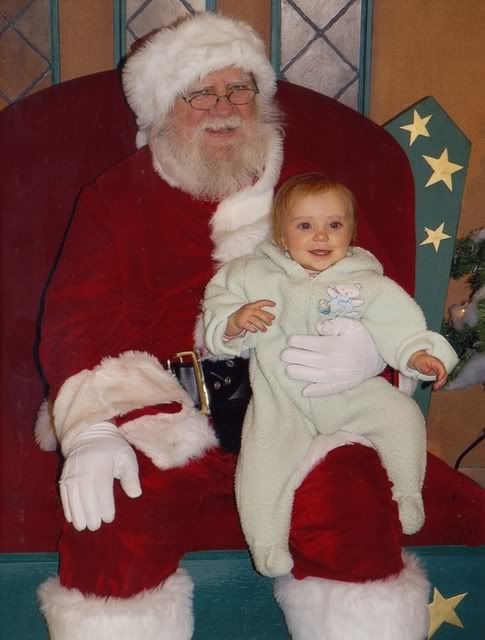
santa pics... for your viewing pleasure


first xmas for india... santa's cool man!


second xmas... not so sure.


and by the third xmas - she's NOT impressed. but kalden doesn't seem to mind.

Tuesday, December 11, 2007

i'm sorry dear blog...

when life gets crazy, something's gotta give.  sadly it's the blog. 

the baby is teething, my stepdaughter is visiting, it's holiday season, clients are having babies....

there is no time for the finer things in life like sitting at a laptop with a glass of wine and pouring out my thoughts into a blog.

i will come back.  promise!

Thursday, November 15, 2007

why i still breastfeed my 4 year old

no, not me. i don't have a 4 year old. i stopped nrursing at 18 months with india and i sometimes regret it. i think this is a beautifully written article about something that is oddly controversial for a lot of people.

http://news.independent.co.uk/health/article3155364.ece

Why I still breastfeed my four-year-old
Friends may think it's freaky, says Annalisa Barbieri, but why should I stop when it's good for my daughter?
Published: 13 November 2007

In December 2004, I wrote in these pages about how I found myself "still breastfeeding" a 14-month-old, when previously I had viewed "extended breastfeeders" as a bit odd, needy and, frankly, freaky. When I first became a mother, I had envisaged myself as a mother with a clipboard, with me in charge, not the baby. I never expected to be the sort of mother I am now, breastfeeding a four-year-old on demand. I thought I knew myself, but motherhood introduced me to a self I never even knew was lurking.

To pick up where I left off three years ago: at just over a year old, my daughter seemed to be losing interest in breastfeeding. But as it turned out, that was the lull before the storm. Just as she started walking, at 18 months, she started to feed intensively. This is normal: as babies reach major developmental stages, they need to feed more. Whereas she had never been able to tell me when she was hungry as a baby, now she beat her chest with her fists – like Tarzan's Cheetah – to tell me that she wanted milk. And she wanted milk a lot. I'd be lying if I said there weren't times when I wished I'd weaned her. I found it hard, but I was lucky. Far from being isolated, I co-run a pro-breastfeeding website that has lots of long-term breastfeeders as members. I wasn't going through anything others hadn't previously.

From the age of two, my daughter started to switch breasts – that is to say, she would no longer feed on one breast, then sedately take the other. She would switch, sometimes manically, between the two, because she had learnt that the let-down (the flow of milk) is faster if you stimulate the breasts in this way. It was also about this time that she started a habit I find extremely annoying to this day: twiddling. While she fed off one breast she would twiddle the other nipple, as if trying to tune in to a short wave radio station. Again, this was to stimulate the milk so that when she did latch on to the second breast, it was all ready to go.

I found feeding between the ages of two and four quite hard at times. She needed to feed a lot, sometimes 50 feeds a day, although they were quick. When we moved house, her feeding became almost frenzied, as if she thought I would leave her. Docking on to the "mothership" became vitally important. I'm not sure how I would have met her needs so quickly during this time without breastfeeding. And I'm not sure I could have parented during the terrible twos without it: it was like having an entire cavalry at your beck and call. Breasts are a powerful parenting tool.

Despite this, breastfeeding is often blamed for many childhood malaises. Your baby is hungry/ sleepy/won't sleep/colicky/you're tired? Give up breastfeeding! The very thing that can make life easier is jettisoned, purely out of ignorance. Imagine if every time you said you found parenting a little bit hard, someone said, "Put your child up for adoption." It'd be ridiculous, wouldn't it?

No matter how hard I found breastfeeding, however, I couldn't stop, for two reasons. The more knowledgeable I became, the more vital I knew sustained breastfeeding to be. And, second, because it is obvious how much breastfeeding means to my daughter. There's the beauty in feeding an older child: there is no second guessing – she tells me just how important my milk is to her, how it "makes everything better". When she gets a cold, she tells me that she needs my milk to "kill the cough". One night, she started to run a desperately high fever (104) and I had no medicine or way of getting any. I fed her all night; she injected her germs into me while my body made the antibodies she needed and fed them back to her. We both worked through the night and, by morning, she was better, as if the fever had never happened. Knowing that you have the wherewithal to comfort and cure your child within your own body is hugely magical and empowering. The bonuses that breastfeeding gifts you make the not-so-easy times fade into nothing.

Because we don't have a habit of feeding walking, talking children in this country, I stopped feeding my child in public when she got to be about two. I didn't want anyone else's ignorance to negate something she found so comforting. Now, there's a word: comfort. I remember, pre-motherhood, challenging a friend of mine who was breastfeeding her 18-month-old child. "But isn't it just for comfort?" I said. "What's wrong with wanting to comfort my child?" she said. Now, this is what I tell people, too. We – or rather, not me; not any longer – seem to be terribly afraid of comforting children. Sometimes it seems as if the more hands-off you are as a parent, the more of a success you are deemed to be.

Breastfeeding is about comfort, but it's also about nutrition, and that continues for as long as you breastfeed your child, whatever age they are. My milk is a living fluid – full of enzymes, macronutrients, minerals, vitamins, essential fatty acids, T-cells and at least 200 types of immunoglobin. And that's just what's known – there are ingredients in breast milk that we don't even know about yet. My milk changes, hour by hour, to meet the needs of my child. It isn't like any other woman's milk, anywhere on the planet, because my daughter isn't like any other child in the world.

In September, just as my child was about to turn four, I went to Italy with her. I'd been the year before and had encountered gentle curiosity about us still feeding. This time was different. "It's a tragedy," said one aged cousin, "that she's still feeding." "Who," I asked, "is it a tragedy for? Not me and not my daughter."

I smiled and offered tea, but she wasn't able to answer. Breastfeeding is an emotive subject – the most emotive I've written about. It brings up all sorts of stuff in people; even friends that have hitherto been supportive probably think I'm in freak territory now, even though I'm just doing what Mother Nature intended – humans are the only mammals that don't let their offspring feed to term. I can't deny that I like to normalise breastfeeding in a world that sees it as increasingly alien, and I'm also aware that some women don't have the support network I do and feel they need to feed in secret or enforce weaning when they don't really want to, because family and friends put pressure on them.

Naomi Stadlen, a psychotherapist, breastfeeding counsellor and author of What Mothers Do, Especially When it Looks Like Nothing, once told me that she thought people might feel threatened by the intimacy between a mother and her breastfeeding child. An uncomplicated response to the information "Yes, I'm still breastfeeding", might be curiosity; any stronger reaction was likely to be the other person projecting their problem on to you. It was a useful piece of information.

My child turned four at the end of September; her need to breastfeed seems to have dramatically declined, although, yet again, this may change. Feeding her is a wonderful time we have together and no matter how busy I think I am, it makes me sit down and be with her. She has lots of skin-to-skin contact with me, which I now know is important for neurological development. I've learnt that the natural age of weaning is closer to six years – when the first permanent molars appear – than six months. If I have another baby, my daughter may wean during pregnancy as milk supply can dip at that time. But if she continues to feed during pregnancy and beyond – called tandem feeding and perfectly possible – or if I don't have another baby, then she's in charge. She will wean when she is, uniquely to her, developmentally and immunologically ready (a child's immune system doesn't mature until they are about seven); she will then lose the ability to suckle. I'm interested to see where this goes and how much more I can surprise myself. All I know is that I'm glad I've got this far.


Why mother's milk is best

* No scientific study has ever been carried out in the UK on breastmilk or breastfeeding beyond two years of age, despite strong anecdotal evidence of its benefits.

* Jack Newman, a paediatrician and world authority on breastfeeding, has this to say about breastfeeding an older child: "Possibly the most important aspect of nursing a toddler is not the nutritional or immunologic benefits, important as they are. I believe the most important aspect of nursing a toddler is the special relationship between child and mother. Breastfeeding is a life-affirming act of love. This continues when the baby becomes a toddler. Anyone without prejudices, who has ever observed an older baby or toddler nursing, can testify that there is something almost magical, something special, something far beyond food going on."

* The World Health Organisation recommends breastfeeding for at least two years.

* Breast milk has 70kcal per millilitre.

* Beyond 18 months, breast milk can provide as much as 31 per cent of calories and 38 per cent of all dietary protein.

* The iron in breastmilk is much more readily absorbed – a child may get as much as 50 per cent of its iron from his or her mother's milk.

* By the 20th month of lactation, levels of igG and igA (two immunoglobulins) are still as high as in the second week.

* "Independence, not dependence, is one outstanding trait that breastfed children who self-wean have in common," one study found (Ferguson, 1987).

* Last week, new research was publiched that showed breastfeeding protected against heart disease and high cholesterol. Children with a particular gene who were also breastfed were shown in the majority of cases to have a higher IQ.

* Breastfeeding has already been shown to protect both mother and baby against diabetes and certain cancers.

Friday, November 9, 2007

crawling!

well now it's a whole new world! kalden is finally crawling. for weeks he's been trying to get his arms and legs working together and this afternoon he suddenly got it. how exciting!

Thursday, November 8, 2007

miniature village


if the world were made up of 100 people...

this is a book that i want to get for india. we see the animated version of treehouse occasionally and it's a really beautiful way to think about the earth.

here's a grown up version:
http://www.miniature-earth.com/me_english.htm

Wednesday, November 7, 2007

breastfeeding makes kids smarter

a new study proves what we already knew...

Link to story

Breast feeding makes kids smarter: study
MICHAEL KAHN
Reuters
November 6, 2007 at 9:06 AM EST

LONDON — A common gene can help explain why breast-fed babies tend to grow up to be more intelligent than those raised exclusively on bottled milk.

Breast-fed babies who shared the genetic variant outscored bottle-fed peers in intelligence tests, researchers said. The variant to the FADS2 gene, involved in processing fatty acids, is found in about 90 per cent of people, they added.

"For 100 years, the intelligence quotient has been at the heart of scientific and public debates about nature versus nurture," Terrie Moffitt of Kings College London and colleagues wrote in their report, published on Monday in the Proceedings of the National Academy of Sciences.

"Evidence that nature and nurture work together drives a nail in the coffin of the nature-versus-nurture debate."

The study looked at 3,200 children in Britain and New Zealand.

Breast-feeding has many advantages for children including reducing infections, respiratory illnesses and diarrhea, earlier research has shown. A study presented at an American Heart Association meeting on Monday added healthier blood cholesterol levels to that list.

Although scientists have been looking at potential links between breast-feeding and intelligence for decades, the direct relationship has not always been clear.
The researchers studied the FADS2 gene involved in processing omega 3 fatty acids found in foods such as salmon, nuts and avocados and turning them into nutrients for the brain.

In both countries, breast-fed children had a higher IQ by about 6 to 7 points, but only if they had a variant that made the gene more efficiently process fatty acids.
For those with the less common – and less efficient – variant, breast-feeding made no difference when it came to intelligence, the researchers said.

The researchers ruled out alternate explanations, saying the effect of FADS2 applied equally to babies with normal and low birth weight. The effect was also the same no matter the mother's social class or IQ. The team also tested the mothers' DNA and concluded that the FADS2 gene did not somehow alter the quality of breast milk.

"We took cells from the children and then analyzed DNA and then we compared how they scored on IQ tests and looked up if they were breast-fed as babies," Dr. Moffitt said in a telephone interview. "It was very straightforward."

While the researchers have found at least one gene linking intelligence and breast-feeding, they said they still need to better understand how FADS2 processes nutrients in breast milk.

They also acknowledge that many other genes also likely have a role in intelligence but say their study offers a different approach to unravelling the human genome, Dr. Moffitt added.

sorry!

i know that i've been missing for over a month and i am SORRY! i had births, i moved to a new home, my kids have been sick and my 8 month old has gone of a sleep strike.


something had to give and it ended up being the blog. but now i'm back and the good news is that i've been mentally hoarding lots of information and articles and im going to post them now!


at least i have a picture of the kids to share. this is from our xmas card photo shoot in the park...