as a doula, i need to stay on top of current research, trends and practises but i also need to understand the history of childbirth around the world. these books are familiar to most birth professionals and they are wonderful resources for any woman.
if anyone who loves me is reading this, please feel free to buy me any of these books! (used is just fine by the way! )
Born in the USA: How a Broken Maternity System Must Be Fixed to Put Women and Children First by Marsden Wagner
Homebirth by Sheila Kitzinger
Ina May's Guide to Childbirth by Ina May Gaskin
The Birth Partner by Penny Simkin
Labor Progress Handbook by Penny Simkin and Ruth S. Ancheta
The Thinking Woman's Guide to a Better Birth by Henci Goer and Rhonda Wheeler
Birthing from Within: An Extra-Ordinary Guide to Childbirth Preparation by Pam England and Rob Horowitz
Pushed: The Painful Truth About Childbirth and Modern Maternity Care by Jennifer Block
any other suggestions welcome!
Showing posts with label pregnancy. Show all posts
Showing posts with label pregnancy. Show all posts
Wednesday, July 11, 2007


Tuesday, June 19, 2007
routine prenatal ultrasounds? no thanks.
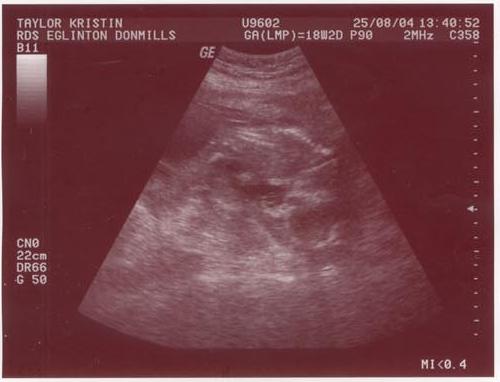
a pregnant friend of mine just told me that she is lucky enough to have a doctor that will give her an ultrasound at every appointment. i didn't tell her that i didn't think that made her "lucky".
perhaps i should have expressed my concerns...
all too often, i hear about women whose experience of pregnancy was one of a medicalized condition rather than a life journey. when a woman finds out that she's pregnant, suddenly she is placed on a roller coaster ride of ultrasounds, glucose tests, blood tests, amniocentisis... it can almost feel as though pregnancy is dangerous to us.pregnancy is a LIFE experience not a MEDICAL experience.
although the mainstream medical community will swear they are perfectly safe, others have raised questions about the long term effects of repeated ultrasounds. the truth is that not enough studies have been done to ensure that we aren't doing damage. even mainstream media such as CNN and BBC have picked up on the issue.the other side of the story is that ultrasounds can only tell us so much. old equipment and unskilled technicians play a huge part is the effectiveness of using ultrasounds for diagnostic purposes.
and for the most part, repeated ultrasounds are just for keeping mom happy.
recently, 3D and 4D ultrasounds have become available across the u.s and even a few in canada. these are even more worriesome as they are being carried out in mall shops; unmonitored and unregulated. even the conservative FDA is concerned.
here is a well researched article with excellent references that looks at the risks of this new "fad".
overall i think it's wise to be err on the side of caution and get only the ultrasounds that are medically neccessary because until someone can prove to me definitively that they are safe, i'm not convinced.
Tuesday, June 5, 2007
the birth of india
 i was 27 when i was pregnant with my first child. an amazing transformation took place in those months; i suddenly became acutely aware of my surroundings, of what i was putting in my body, of what i was watching on tv and of where our precious planet was headed.
suddenly i could not read enough. i literally devoured every website i could find, every book i could check out of the library and soon i found myself at odds with much of the mainstream world.
i decided to have a homebirth with my midwives and i read every study, statistic and article i could find. my instincts told me it was the safest option for me and i soon found that the facts backed me up.
i never worried about my homebirth, people asked me all sorts of questions and i never had a moment's second thought. it was on of the easiest decisions that i've ever made.
labour with india was LOOOOOOONG. i wan 9 days overdue but happy. i went into labour on a Sunday - hung out with my family, walked around the local malls and played cards with my husband. my contractions remained fairly insignificant. i didn't get any sleep at night though, and by monday evening i knew things were getting serious. contractions were more regular and not so much fun anymore. i had a bath and a glass of champagne and revelled in my last moments of "freedom".
by 11:30pm my midwife arrived and settled in. i made her some soup and she took a nap. i was horrified to find out that i was only 3 cm dilated and thought for sure i was going to be in labour forever. by that time i could no longer sit or lie down. it was far too painful and so i walked. i walked up and down and around our apartment. at around midnight my water broke (thanks yoga ball!) and then my midwife says she knew things were picking up because i lost my sense of humour. there was a small amount of meconium in the fluid and we discussed the option of tranferring to a hospital but my instinct told me that all was fine and we stayed at home.
i continued to walk. i had my husband pressing on my lower back through each contraction and i got in and out of the tub and shower to relieve the pain. i tried to meditate through the pain - i used pictures of the dalai lama, i used a prayer wheel, i used my husband.
at one point my midwife told me to eat something to keep up my energy and so i chose some jello. as the early morning approached, i was losing energy and feeling hopeless. i cried. i threw up. i tried to cancel the whole thing.
my husband was a rock throughout everything. he cheered me on, did exactly what i told him to and held me hand the whole time. FINALLY around 6am my secondary midwife arrived and after they checked me they told me that i could start to push whenever i felt the urge. sure enough, a few minutes later i felt that unforgettable sensation. i started pushing while sitting on the toilet (not a pretty image i know) and my midwives helped me focus my energy to get the most out of my contractions. finally my husband looked at me and said "i can see her hair!"
at that point adrenalin kicked in.

they got a mirror and i was able to see the full head of hair that my daughter had. i was so excited. i was about to be a mother.
i pushed some more and then moved to a birthing stool. DH held me up and my midwives guided me through it. once her head was out they suctioned her (because of the meconium) and i noticed my midwives look at each other. i focused on a couple more pushes and out she came. my gorgeous baby girl.
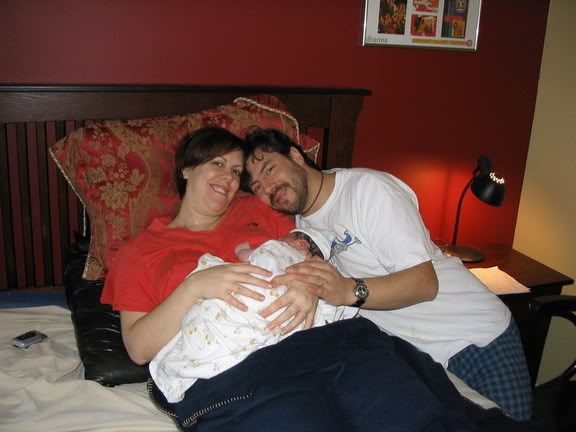
my midwife put india on me and tears of joy and relief poured down my face. i held her and told her a million times that i was her mommy. it was then that they told me she had been born posterior. a sunny side up baby. a 9 pound 3 oz direct OP baby.
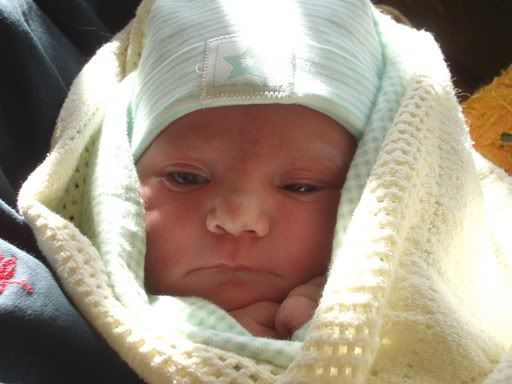
within a few seconds, india was breastfeeding and thus began my life as a parent. it's a memory i cherish more than anything. for weeks i felt like a superhero. in fact i think i still feel that way.
freebirthing
i had midwives present at my homebirths and i wouldn't have had it any other way but every woman should decide what's right for them. i can't believe that doctor believes that giving birth "is the most dangerous thing" most women will do in their lives. where do doctors learn to be so fearful of childbirth??
http://edition.cnn.com/2007/HEALTH/05/23/freebirthing.reut/
Freebirthers dismiss fear and
bring babies home
POSTED: 1353 GMT (2153 HKT), May 23,
2007
LONDON, England (Reuters) -- They insist they're no superwomen, they have no special powers, and are certainly not pain or adrenaline junkies. But "freebirthers" choose to go through what some call the most painful and potentially frightening experience of a woman's life with no drugs, no midwife and no medical help.
Delivering their own babies at home, often alone, they dismiss what they say is "fearmongering" by doctors and midwives and confidently catch their offspring as they leave the womb."Birthing uses the same hormones as lovemaking -- so why would you want anyone poking and prodding you, observing you and putting you under a spotlight?" said Veronika Robinson, an Australian based in Britain who sees growing interest in freebirth among readers of international magazine, "The Mother."
Her comment is echoed by many in online discussion groups about freebirth, where women insist having a baby is as intimate an experience as having sex.
"We were the only people there when she was conceived, and it felt absolutely 100 percent right that we were the only people there when she was born," writes Laura Fields from the United States.
Robinson says medical establishments in Britain and across other westernized nations have for years been "taking something that's natural and making it into a disease," and now, with freebirthing, "women are taking their power back."
Free- or unassisted birth means having a baby with no medical or professional help. In Britain, as in North America, where its popularity is growing, it is legal as long as delivery is not "assisted" by an unqualified partner, friend or husband.
To some, like new mum Janet Sears, the idea of giving birth alone, with no-one around to help if things go wrong, is little short of madness: "It's my idea of hell," she told Reuters.
Intervention and fear
But one of its most prominent supporters, Laura Shanley, an author on childbirth, is now mother to four children -- all of whom were born at home without the help of doctors or midwives. Shanley, who lives in Colorado in the United States, says that in essence birth is only problematic because of three main factors -- poverty, intervention and fear.
As long as clean water and reasonable living standards are available -- as they are to many women in the west -- then the task is to eliminate the other two factors and a natural birth will be as safe as it can be."As I began to understand how fear affects the body, and that birth is not inherently dangerous provided we don't trigger the fight-flight response and shut down labor, then to me it was natural to want to just trust myself," she told Reuters.
"It didn't make sense to me that something that ensures the continuation of the race would be a dangerous and scary event."
Diana Drescher, a Dutch freebirthing enthusiast who lives in Britain and wants a fourth baby with her German partner, agrees.
"We've been giving birth for thousands of years and we're still in this world. If it was that dangerous we wouldn't be here," she told Reuters.
Coming from the Netherlands, where there is a more relaxed attitude to birth, Diana finds British medical authorities far too quick to intervene and is determined to have her next baby here with no professional presence. She says she will also avoid being in her partner's native Germany where she says freebirth is virtually impossible without fear of the authorities finding out and intervening.
"I do know some people who have had unassisted births in Germany, but they will not talk about it. It's a very close community that does it and they have to be very careful."
'Most dangerous thing'
Britain's Department of Health frowns on the practice of freebirthing and says every woman should have a midwife.
"The safety of mothers and their babies is our top priority," a spokesman told Reuters. "Midwives are the experts in normal pregnancy and birth and have the skills to refer to and coordinate between specialist services. Every woman needs the care of a midwife in labor and birth and those women with more complex pregnancies may need a doctor too."
And some doctors, as well as some friends and relatives of those who chose to go it alone when they go into labor, are fiercely critical of what they see as a selfish,
reckless, even irresponsible approach to childbirth."Dr. Crippen," a British National Health Service doctor who writes an award-winning blog on the Internet, has reacted angrily to growing interest in freebirth, saying babies born this way should have a right to legal recourse later in life. He says "giving
birth is the most dangerous thing that most woman will do during their life,"
and argues:"Does a mother not owe a duty of care to her baby? Should a
mother not take reasonable care to protect the baby when she gives birth? And if
she does not take reasonable care -- and the standard should be objective not
subjective -- why should a baby who has sustained avoidable brain damage due to
the mother's negligence not take action against his mother?"If a baby were to die during a freebirth, Dr Crippen argues the mother should be prosecuted for manslaughter.
Mary Siever, a mother of three who lives in Alberta, Canada, said she has experienced the wrath of those around her when they learned she had a baby on her own.
"There are are people who are horrified when they find out that an unassisted birth has taken place," she told Reuters.
"I can't claim to know why they feel this way, but my belief is that the majority of them --
doctors and health authorities -- truly do not think women are intellectually capable of making their own decisions when it comes to birth."
Monday, June 4, 2007
where are all the midwives?
i can't even fathom what my children's births would have been like if i
hadn't had my midwives. they are truly PRICELESS.
hadn't had my midwives. they are truly PRICELESS.
From The Toronto Star
The hands in demand
Midwives are wanted more than ever as OB doctors retire, writes Andrea Gordon
May 25, 2007 Andrea GordonDori Skye Engel has a tiny foot wedged high beneath her ribcage. It's been a long time since she could see her own neatly polished toes. And these days it requires a Herculean effort to hoist her toddler.
But still, Skye Engel's blue eyes sparkle. One month before her due date, she radiates that unmistakeable glow.
Pregnancy hasn't always been this serene, though. Two years ago, when just five weeks along with her first child, Skye Engel, 32, was frantic to find a midwife.
"I was on six wait lists in my catchment area, I called all of them every week," recalls the Toronto mom. "That was a pretty big shocker for me."
This is no surprise to midwives who are distressed at the number of women they are forced to turn away. According to the Association of Ontario Midwives, 40 per cent of women seeking midwifery care can't get it. Those in the profession say clients will lie about their due dates, addresses, and use different names to get on wait lists more than once.
"It's really heartbreaking," says Manavi Handa, Skye Engel's midwife at Kensington Midwives in downtown Toronto. "That's how desperate women are."
When she was five months pregnant, Skye Engel got the call she'd been waiting for from Kensington. She and her husband were elated. Four months later, Noah was born at home, all nine pounds, 13 ounces of him.
Now Skye Engel is back at Kensington, listening to the rhythmic swoosh of her second baby's heartbeat on the fetal Doppler, grinning as Handa gently prods the little being that responds with heels and elbows.
Midwifery has come a long way since joining the Ontario health care system 13 years ago.
Midwives have gone from having no hospital privileges to delivering eight per cent of the babies in Ontario says Handa, 35, who has been a midwife for seven years. It has meant more choice for women and families, a boom in midwifery services and a more collaborative and responsive maternity care system.
But the mismatch of supply and demand – which reflects a trend among all maternity care providers, including obstetricians and family physicians – is worrisome.
Kensington's eight midwives, who deliver about 320 babies a year and have privileges at St. Joseph's Health Centre, are among the many who can't meet the demand for their services. Similar tales prevail at practices throughout the GTA.
"You have to call the midwife and get on that list the minute you pee on the stick," says Stephanie Alouche, of Ajax, who had a home birth two years ago, thanks to Sages-Femmes Rouge Valley Midwives, which serves Scarborough and Durham.
The shortage of midwives also creates a conundrum for the profession, adds Elizabeth Brandeis of the Toronto Midwives Collective, a group of 10 who deliver a total of 300 babies a year – two-thirds at Mount Sinai Hospital, the rest at home.
"We're hesitant to promote our services because there isn't the access, but that's exactly what we need to do ... In order to really be providing choice to the women of Ontario, it's important they have access to midwifery."
The Society of Obstetricians and Gynaecologists of Canada, which over the years has become a big supporter of accredited midwives, has been warning for several years now that a crisis is looming in obstetrical care. Nearly one in three OBs is expected to retire from full-time practice over the next five years. Among family physicians, 13 per cent delivered babies in 2004, down from 36 per cent in 1990. And 36 per cent report they do not provide any maternity or newborn care in their practice.
Midwives would like to fill the gap and cite three areas that need to be addressed:
A raised cap on the number of midwives licensed to work in each hospital. Busy collectives can't hire more midwives unless they can promise them hospital privileges. Otherwise, those entering the field can't practise.
Adding spots at the province's three education programs at Ryerson University in Toronto, McMaster University in Hamilton and Laurentian University in Sudbury, which graduate a total 40 to 60 new midwives each year. As well, expand the accelerated program for midwives trained in other countries.
Create birthing centres that would take the pressure off hospitals.
Handa stresses that greater reliance on midwives is cost-efficient. Ten midwives might bring in a caseload equal to that of two obstetricians. But their patient-centred personal care, including 45-minute appointments and continuous emotional support, also means clients tend to leave hospital more quickly, require fewer medical interventions, and receive attentive prenatal and postnatal care. All of which translate to lower costs for the health care system. They are also the only regulated professionals to accommodate home births.Many midwives are concerned about mounting C-section rates – currently about 25 per cent of all deliveries – and the medicalization of childbirth by specialists whose training focuses on high-risk situations and intervention. The price is fear and apprehension that translates even to women in low-risk labour and delivery. "When does a woman ever get told your body knows what to do?" says Handa.
Adds Brandeis: "A midwife's perspective is that addressing fear with information is probably a healthier place to start."
Personal care was one of the main reasons Lisa Marie Fletcher, of Whitby, wanted to have her babies with a midwife. Now 24 weeks pregnant with her third child, she has received her maternity care from Carole Cameron of Midwifery Services of Durham. Her eldest, 3-year-old William, arrived after a smooth four-hour labour. With her second, a little over a year ago, Fletcher had an hour of contractions, called her midwife and then promptly gave birth to Samuel on the floor of her front hall. Her husband delivered.
"This time around we are hoping for a different kind of home birth," she laughs.
To Fletcher, the most important element of midwifery has been the post-partum care. The midwives were there when Samuel turned blue at two days old and was rushed to intensive care with apnea. They sat with her in the hospital, helped her pump breast milk through the week she couldn't nurse him and helped with the transition when they were finally able to bring the baby home.
Cameron, the first midwife in Ontario to deliver a baby unassisted by a physician just after the legislation passed in 1994, remembers when women had to pay for services and also had to be under a physician's prenatal, labour and delivery care for hospital births.
Since joining the system, midwives can now stand up in hospital rounds, they teach nurses, and work collaboratively with obstetricians
Like many midwives, Cameron joined the profession following the birth of her own children, the first with a physician and the next two with midwives.
"For me, it was about control. I felt as if I gave it all up with my first child." She doesn't blame the people, just the system. "I had to fit."
As midwives, "it's our job to fit the client and what they need."
That's an approach that was hugely important to Alouche as she prepared for the birth of her fourth child. Alouche, 33, had delivered one baby with the OB on call, who wasn't her own; she had one baby induced so her own OB could be there; her third started with midwives and ended up a Caesarean after the baby turned to breech position, which she describes as "the most horrendous experience of my God-given life."
Fourth time round she knew what she wanted: to at least try for a natural vaginal birth at home. She found a midwife who was willing to try. "When I talked, I felt I was being heard. When I said no, she said okay." Alouche delivered Meaghan Rae at home in a joyous bathtub birth two years ago.
For Handa, it's a privilege to be with a woman during the transformative process of birth and motherhood.
"It's the continuity of care that really makes me care. That's what gets me out of my bed at three in the morning."Skye Engel says the trusting relationship with her midwives was what got her through the toughest parts of a home birth.
"People will say to me `I'm not a hero like you.' And I don't understand that. I'm no hero."
Handa doesn't miss a beat on that comment: "As a midwife, I say you are a hero, it doesn't matter how you do it."

Subscribe to:
Posts (Atom)